Behind every corner, an age. Behind every change, a life.
The landscape we walk through today brings together decisions made over more than two centuries. Follow its story, meet its protagonists and place each transformation in the world that made it possible.
1783BEFORE
01 · THE LAND BEFORE THE DREAM
Before the garden, a kitchen garden.
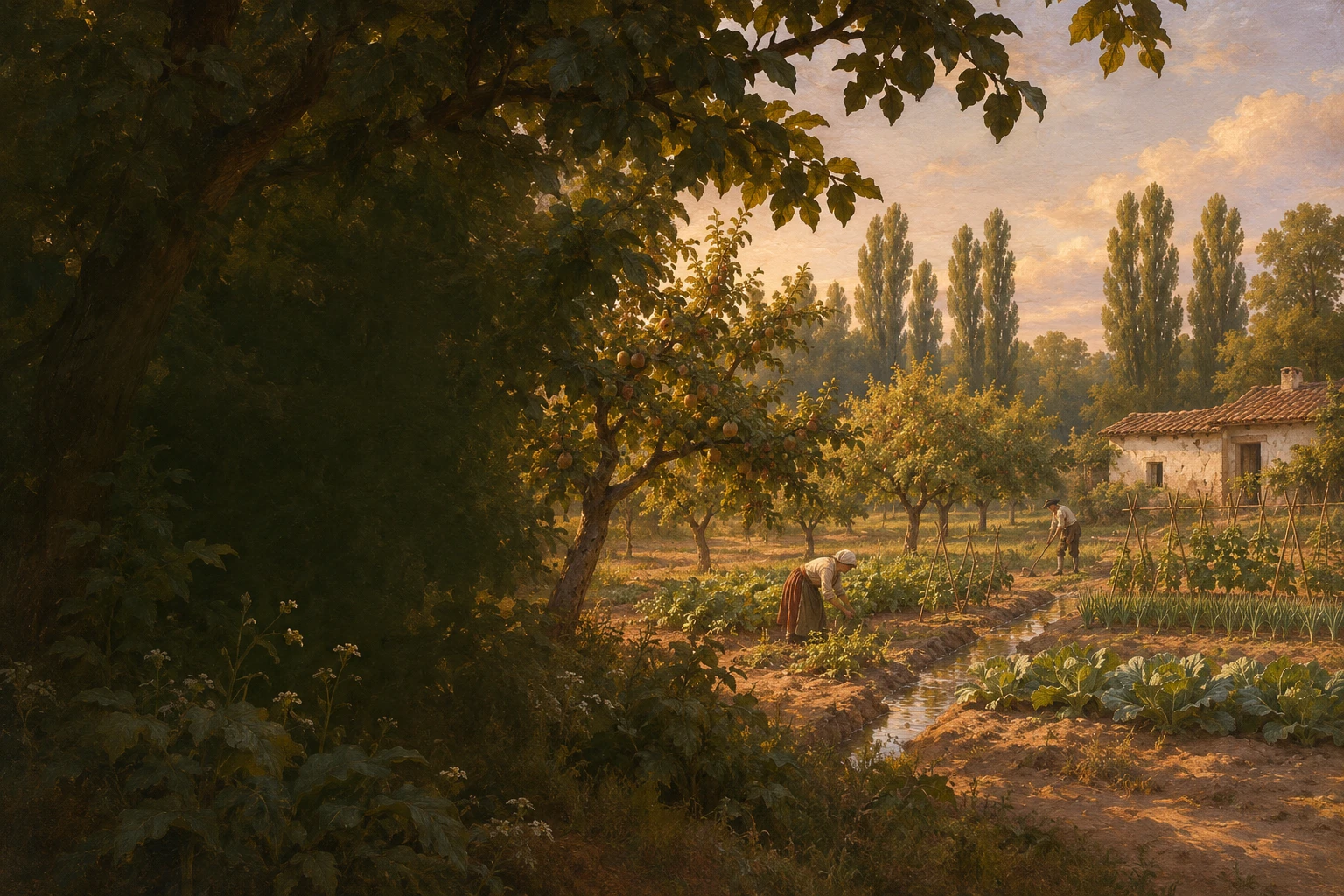
El Capricho did not begin on empty ground. Its story starts with a country house, crops and water in the small village of La Alameda.
Historical studies trace a seventeenth-century kitchen garden to an Italian owner named Faviani. The house, outbuildings and water supply formed a working estate: somewhere to live and cultivate the land, long before it became a setting for leisure.
In the eighteenth century, the estate associated with the House of Priego attracted María Josefa Alonso Pimentel and her husband, Pedro de Alcántara Téllez-Girón. A lease preceded the purchase. The landscape we know today would emerge through successive acquisitions and building projects.
1783THE BEGINNING
02 · INVENTING A LANDSCAPE
Nature, set on stage.
On 18 October 1783 a transformation began that would last for decades. María Josefa turned the estate into a place to cultivate the arts, observe nature and surprise her guests.
Pablo Boutelou's plan of 1784, the hiring of Jean-Baptiste Mulot in 1787 and Pierre Prevost's arrival in 1795 reveal a collective undertaking. Gardeners, architects, sculptors, painters and many other workers built this landscape under the duchess's patronage.
The temple evokes antiquity; the Bee House allows visitors to observe hives; the Old Woman's House turns peasant life into a theatrical scene. Meanwhile, the existing house was enlarged into a palace. Goya painted rural scenes and witchcraft subjects for a collection shaped by taste, theatre and debates about superstition.
María Josefa was Countess-Duchess of Benavente in her own right. Her power to make decisions also came from her own wealth and cultural networks. The beauty of the estate rested on rents, skilled labour and a profoundly unequal society.
A LANDSCAPE TAKES SHAPE
Architecture to inspire wonder.
A temple, a rustic house, a place to dance. Each building reveals a way of seeing the world.
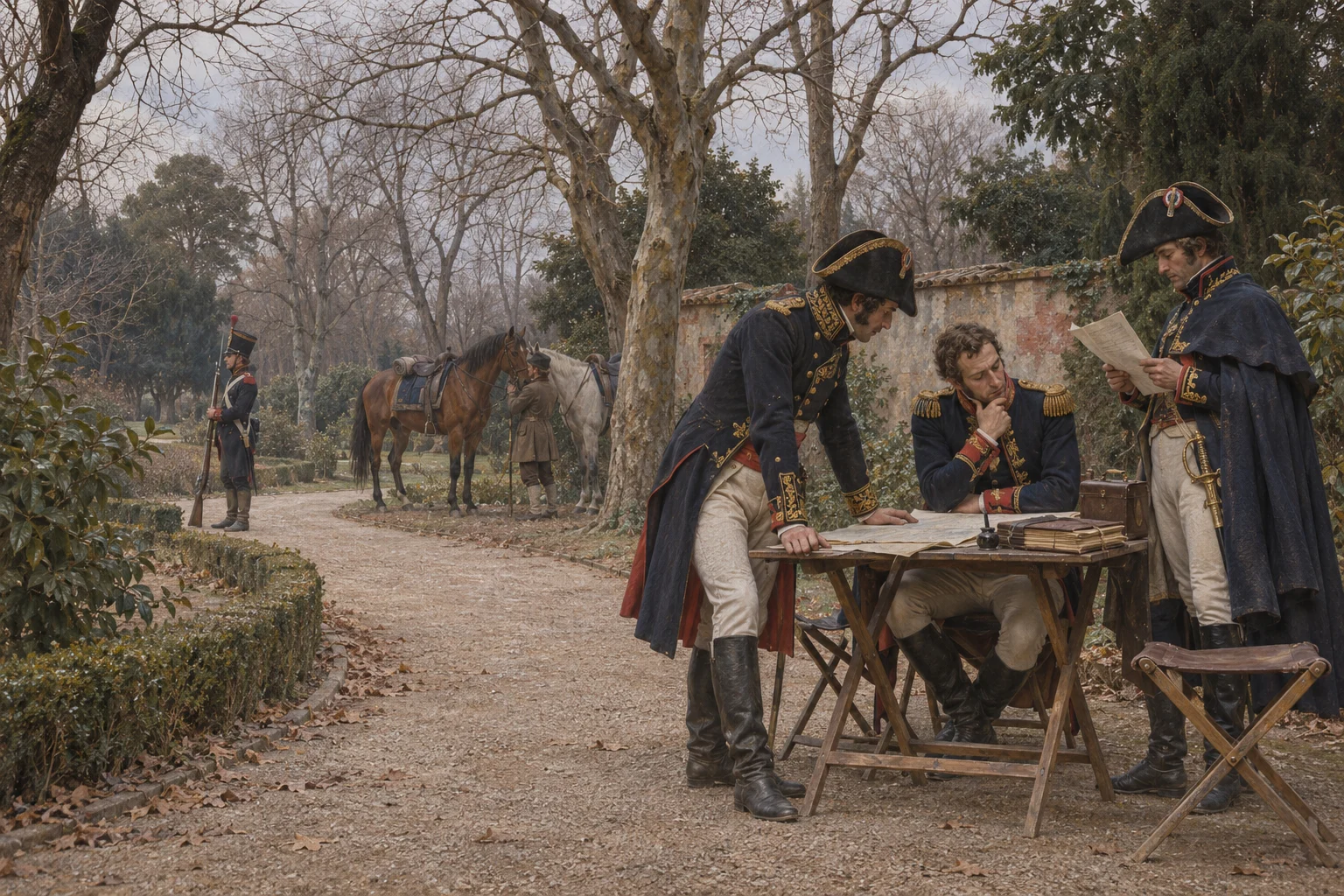
The Napoleonic invasion changed the ownership of La Alameda. The duchess would recover possession and resume building while Spain swung between absolutism and liberalism.
Following her husband's death, María Josefa bought the estate's share of the property in June 1808. Confiscation by the occupying authorities changed the situation again: Belliard took possession in December 1809 and the transfer was registered in 1811.
Occupation did not mean total destruction. Studies of the records describe continued care of the garden and Prevost remaining at work. María Josefa's return is documented on 14 October 1813; the Ballroom Pavilion, built in 1814–1815, belongs to this period of recovery.
In 1820 her son Francisco de Borja, the 10th Duke of Osuna, died. When she herself died in 1834, aged 81, El Capricho therefore passed to her grandchildren's generation. Succession to the title and the transfer of property followed different timetables.
1834THE INHERITANCE
04 · A LANDSCAPE OF MEMORY
A grandson carries on the dream.
Pedro de Alcántara, the 11th Duke of Osuna, transformed his grandmother's legacy and made it a place of family remembrance.
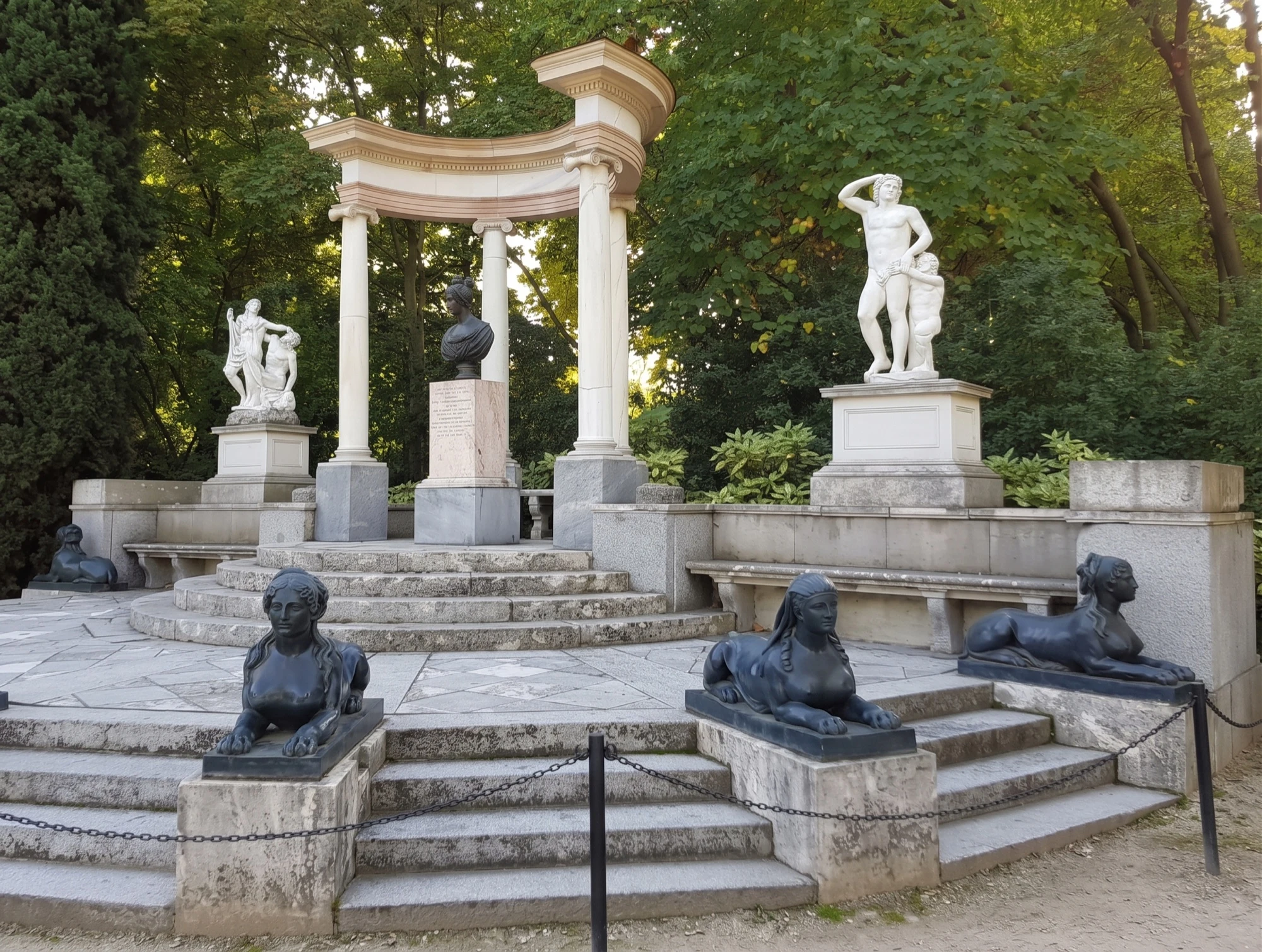
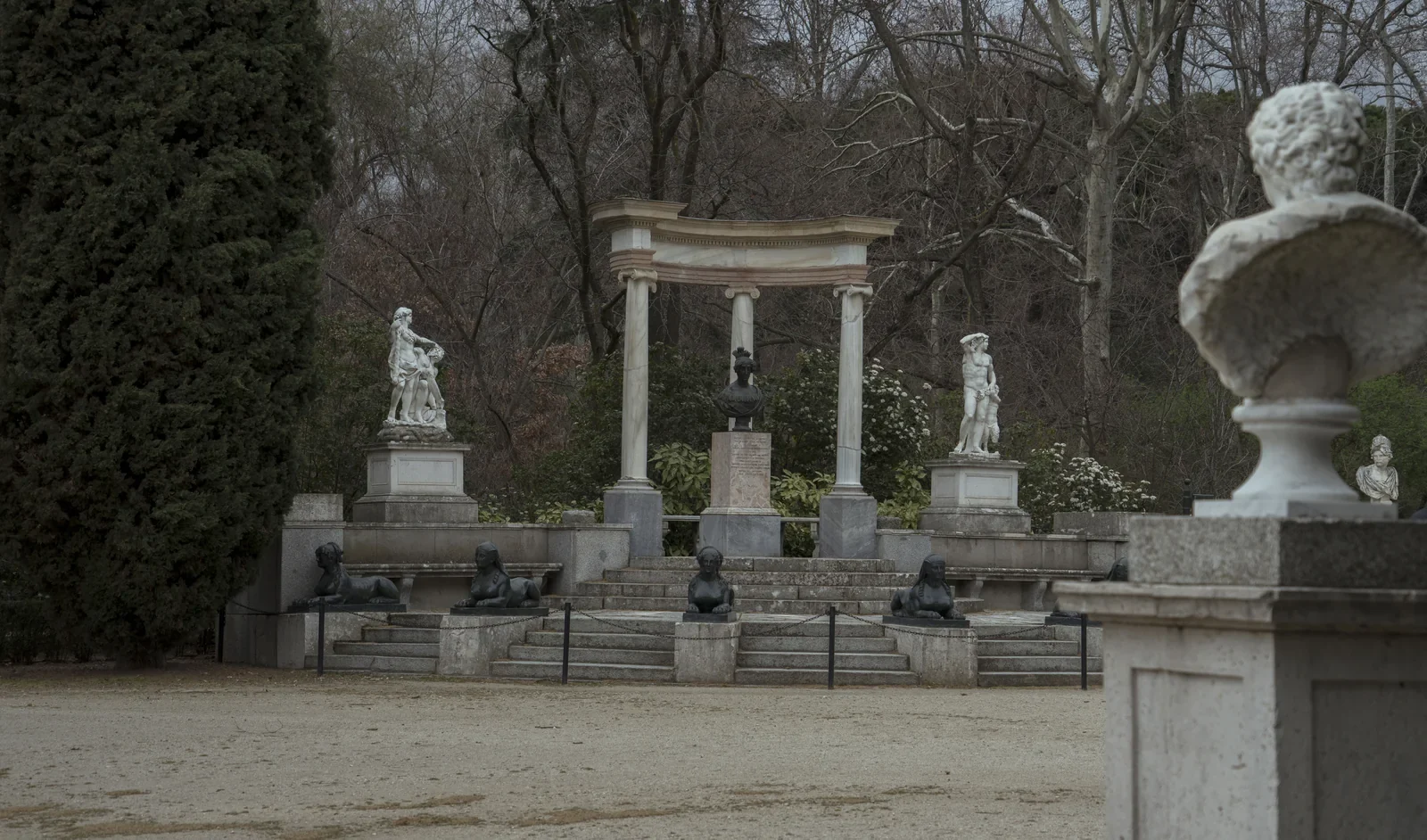
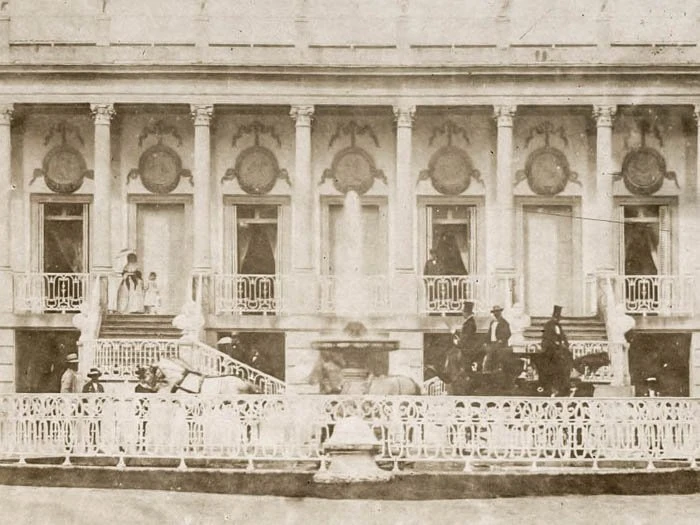
The palace façade facing the garden was remodelled between 1835 and 1838. The exedra, completed in 1838, commemorates the founder. Martín López Aguado and the sculptor José Tomás contributed to a programme combining architecture, sculpture and dynastic memory.
The island monument evokes the 3rd Duke of Osuna: it is a memorial, not his burial place. New walks and the Iron Bridge enriched the experience of the water. The garden we see today therefore contains major interventions made after María Josefa's death.
Pedro died in 1844, unmarried and without children. His brother Mariano succeeded him. Yet the family also extended through other branches: El Capricho's story is only one part of a much broader genealogy.
FRANCISCO DE GOYA · 1787–1788 · MUSEO DEL PRADO
THE PEOPLE BEHIND THE LANDSCAPE
One family. Many branches. Different inheritances.
The garden passed from grandmother to grandson, then to his brother. But the family's story reaches far beyond them.
María Josefa → Pedro, 11th duke → Mariano, 12th duke
Discover who was who, and why inheriting the Osuna title did not necessarily mean receiving El Capricho.
1844THE ACCOUNTS
05 · SPLENDOUR AND FRAGILITY
Beauty came with accounts to settle.
Mariano, the 12th Duke of Osuna, kept the estate active. Behind the image of the grand aristocrat, the accounts reveal complex assets and growing dependence on credit.
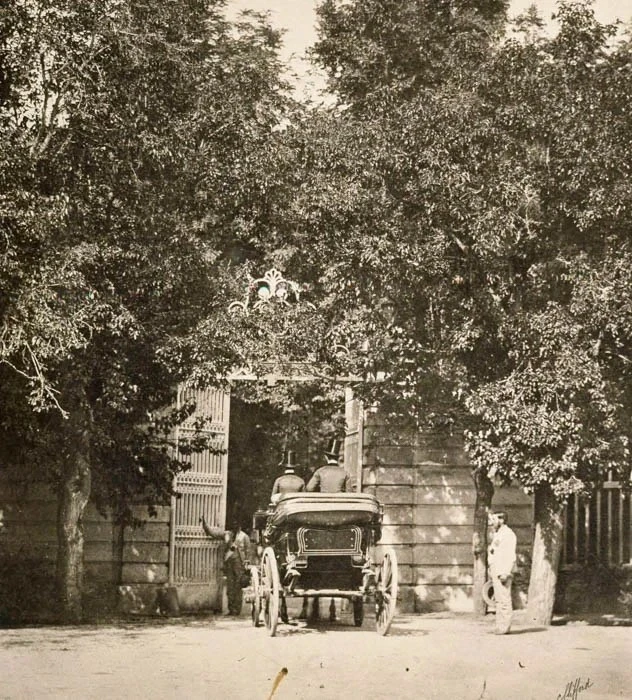
A pheasantry in 1851 and stables for an English stud in 1854 prolonged La Alameda's use as a country retreat and a display of status. In 1856 Charles Clifford photographed the ducal properties: the landscape also began to circulate as an image.
The family's financial crisis did not arise from a single extravagant gesture. Accounting studies identify debts predating Mariano and budgets supported by sales and borrowing. Land, investments, representational spending and financial commitments must be considered together.
Mariano married Leonor de Salm-Salm in 1866. He died in 1882 without direct descendants. His cousin Pedro, from the Anglona branch, succeeded to the Osuna title; the indebted assets remained subject to estate administration, claims and creditors.
1882THE DISPERSAL
06 · A COLLECTION SCATTERS
The paintings find new homes.
The 12th duke's death began a prolonged liquidation. Books, paintings and properties followed different paths: the collection ceased to be a single whole.
In 1884 the state authorised the purchase of the Osuna library for 900,000 pesetas; the collections were received in 1886. This was separate from the painting sales of 1896. Nor had the entire ducal library been housed in the palace at El Capricho.
The 1896 auction allows us to trace individual works. The Forcibly Bewitched went to the National Gallery in London; The Meadow of San Isidro entered the Prado. Provenance records show how an aristocratic collection became part of museums and private collections.
The estate was leased to the Duke and Duchess of Santoña during the liquidation. In 1898 it was offered to Madrid City Council for the San Bernardino charitable institutions, but the transaction did not proceed. Gustavo Bauer bought it in 1900, beginning a new chapter outside the House of Osuna.
GOYA AND THE OSUNAS
Once brought together. Now scattered far and wide.
Inventories and provenance records let us trace these works. Each has a story of its own.
Books and paintings were not sold in a single transaction. State purchase of the library was authorised in 1884; the painting sales of 1896 opened other paths.
1900THE 20TH CENTURY
07 · THE GARDEN AND THE CITY
Surviving a century of change.
The Bauer years, the Civil War and Madrid's expansion brought new uses to the former pleasure garden. It preserved its forms, but also traces of conflict and neglect.
Gustavo Bauer's purchase in 1900 linked the estate to the financial upper bourgeoisie. Family involvement and the company's difficulties continued after his death. In 1934 designation as a Jardín Artístico protected the site without making it public property.
During the Civil War, El Capricho became part of the headquarters of the Army of the Centre. Its bunker and shelters served the defence of Madrid and protected command from aerial bombardment. This military use did not make Miaja a property owner.
The Bauer liquidation sold the estate to Inmobiliaria Alameda de Osuna in 1945; the garden was separately registered in 1949. As the outskirts urbanised, hotel projects emerged. Gaps remain in the subsequent corporate chain of ownership, but the pressure on the old estate is clear.
1974THE RECOVERY
08 · A SHARED HERITAGE
The garden opens to everyone.
Municipal acquisition changed El Capricho's future. Recovery required research, skilled trades, restoration and time: a new way of caring for an inherited landscape.
Municipal acquisition is usually dated to 1974, with formalisation through a property exchange cited in 1975. A partial public opening took place on 10 November 1978. Recovery was not a single inauguration but a succession of campaigns.
The Alameda de Osuna training workshop, operating from 1986 to 1992, combined vocational education with restoration. Work continued into the following decade, receiving Europa Nostra recognition in 2001. In 2016 the bunker opened to visitors, bringing wartime memory into the interpretation of the garden.
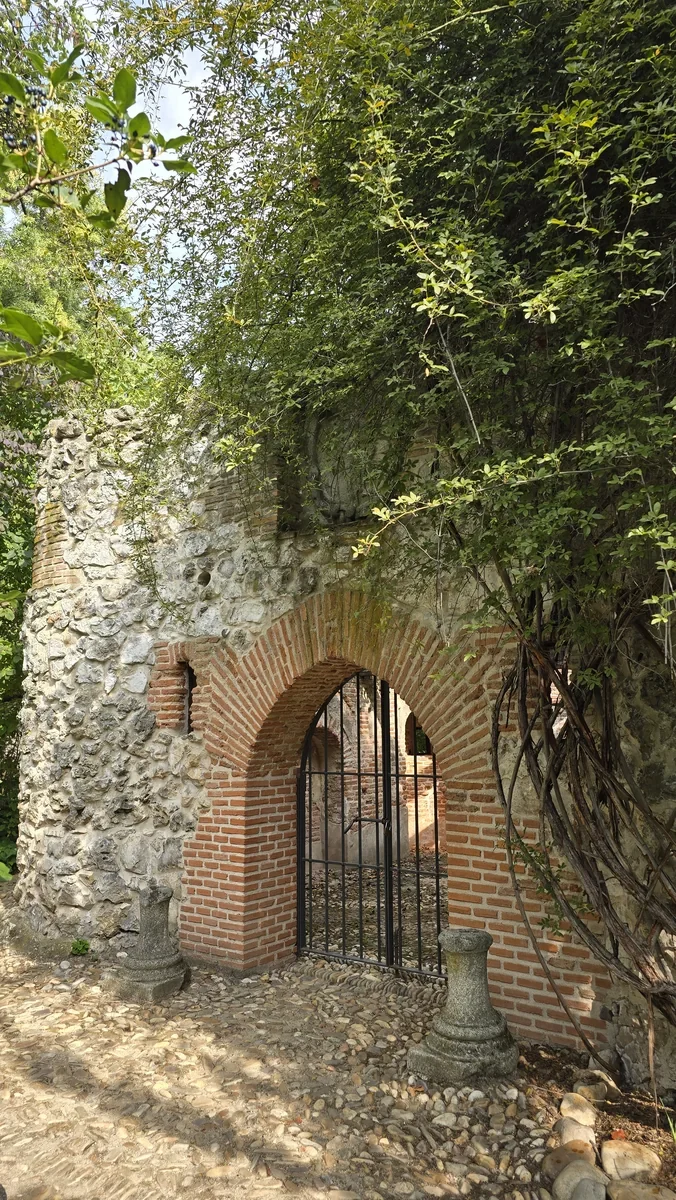
Restoration of the palace and work on the Ballroom Pavilion and Fortín continued into the twenty-first century. In 2026 an autumn opening for the palace was announced and the name Palacio del Capricho was approved. An announcement and an actual inauguration are different milestones; the latter is not confirmed by the documentation used in this edition.
THE STORY CONTINUES
Now the garden belongs to us too.
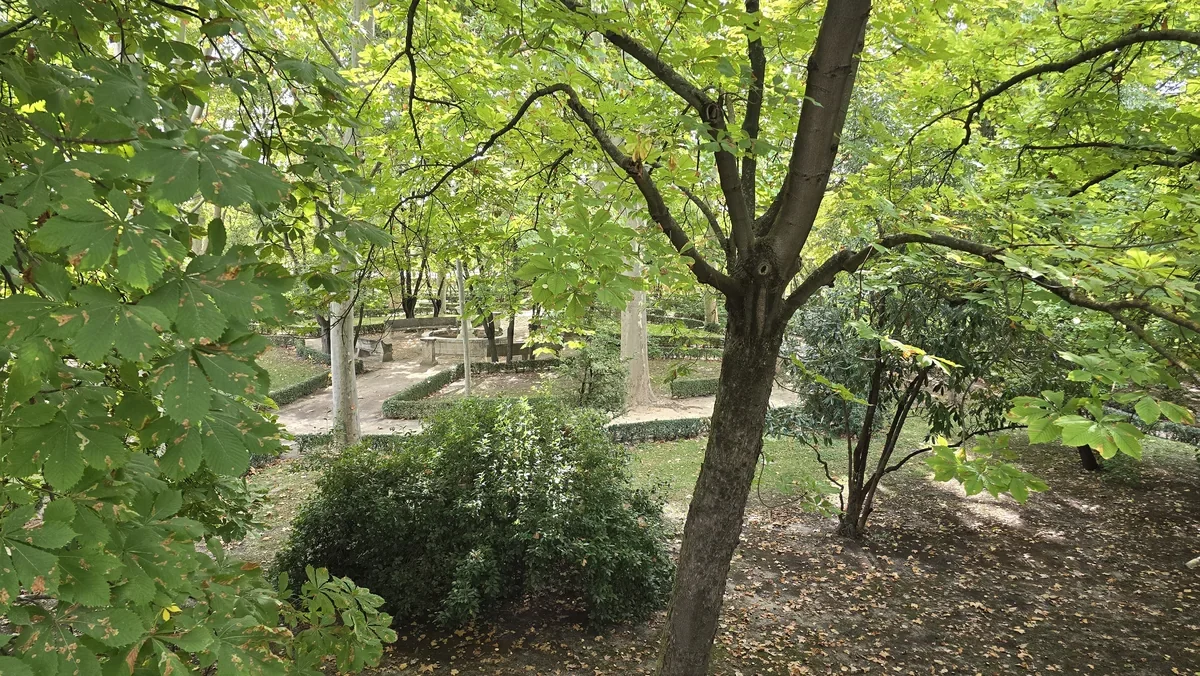
To walk through it again is to recognise its many lives: the kitchen garden, the Enlightenment dream, family memory, war and recovery.